
10 Day Trips from Siegen with the Deutschlandticket
As our semesterticket is also the “Deutschlandticket” you can use it, to discover a lot of beautiful locations near Siegen by train! You can reach many destinations with no or just one or two transfers. That makes it possible to travel to your destination early in the morning, visit the place and come back to Siegen in the evening. It is important to know, that you can only take regional trains with your Deutschlandticket but no distance trains!
For researching the connections, I recommend downloading the app “DB Navigator” where you can search for train connections. In the settings it is possible, to set the language to English! You can tick a box so that only Deutschlandticket connections are shown! In addition, you are able to see if your train is delayed or cancelled. That is very helpful, because sometimes that happens with Deutsche Bahn. 🙁
Still, traveling by train is a great way to discover Siegens surroundings! Often, the trains tracks go through really beautiful nature, and it can feel like an adventure itself just sitting in the train looking out of the window.
These are my tips for which destinations are worth visiting and where you can go and come back in just one day:
- Cologne
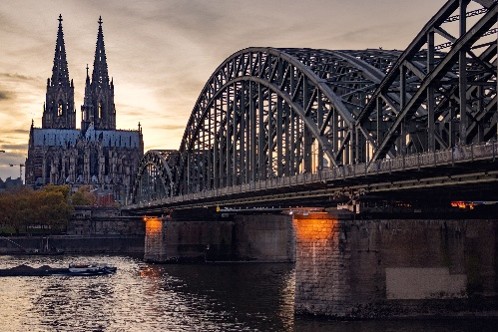
Cologne is famous for its breathtaking Gothic Cathedral, one of Germany’s most iconic landmarks and a UNESCO World Heritage Site. Stroll through the charming Old Town, walk along the Rhine River, or stop by one of the city’s many cafés and museums.
How to get there: Take the train RE9 from Siegen Hbf to Köln HBF (central station). The train is going hourly, at 9 past the hour.
- Bonn
Once the capital of West Germany, Bonn is a relaxed riverside city and the birthplace of Ludwig van Beethoven. Explore the historic city center, enjoy a walk along the Rhine, or visit one of the excellent museums on Museum Mile.
How to get there: Take the train RE9 from Siegen Hbf to Siegburg/Bonn. Then take the Straßenbahn STR66 to Bonn central station.
- Marburg
Marburg is a picturesque university town known for its fairy-tale atmosphere, colorful half-timbered houses, and hilltop castle. Wander through the narrow cobblestone streets and enjoy stunning views over the old town.
How to get there: Take the train RE99 from Siegen HBF to Gießen. Than transfer to RE30 to Kassel. Get off the train at Marburg (Lahn).
- Frankfurt
Frankfurt combines modern skyscrapers with a charming historic center, making it one of Germany’s most unique cities. Visit the Römer Square, walk along the Main River, and enjoy the impressive skyline from one of the city’s viewpoints.
à How to get there: Take the train RE99 from Siegen HBF to Frankfurt HBF. The train is departing every two hours!
- Winterberg
Winterberg is a popular destination for outdoor lovers all year round, offering hiking trails in summer and skiing in winter. Whether you want to enjoy nature or simply escape the city for a day, it’s a perfect choice.
How to get there: There are several options. Please look into the App DB Navigator to see which one is most suitable for you. It might depend on if you prefer bus or train rides.
- Biggesee
Biggesee is one of the most beautiful lakes in North Rhine-Westphalia and an ideal destination for a relaxing day outdoors. Go for a lakeside walk, rent a boat, or simply enjoy a picnic with scenic water views.
How to get there: Take the bus SB1 from Siegen ZOB to Olpe ZOB. Then take the train RB92 (currently it is replaced by busses) to Finnentrop and get out at the stop called “Sondern”. There you can go swimming, hike a bit or get ice cream.
- Freudenberg
Freudenberg is best known for its famous “Alter Flecken,” a beautifully preserved ensemble of black-and-white half-timbered houses. Although it’s a small town, its postcard-perfect streets make it one of the most charming places near Siegen.
How to get there: There are several Busses from Siegen ZOB. Get of at “Freudenberg Bahnhofsstraße”
- Königswinter (Drachenfels)
Königswinter is home to the legendary Drachenfels, one of the most famous hills along the Rhine. Hike to the top or take the historic cogwheel railway to enjoy panoramic views and visit the stunning Schloss Drachenburg.
How to get there: There are several options, look up whats most suitable for you on Google Maps or DB Navigator!
- Limburg an der Lahn
Limburg is a charming medieval town famous for its impressive cathedral overlooking the Lahn River. Its beautifully preserved old town is filled with colorful half-timbered houses, cafés, and small boutique shops.
How to get there: First take the RE99 to Frankfurt and get off in Wetzlar. Then take the RB45 to Limburg!
- Dortmund
Dortmund is best known for football and is home to the legendary Borussia Dortmund and Signal Iduna Park. Beyond football, you can relax at Phoenix See, visit the German Football Museum, or explore the city’s green parks.
How to get there: Just take the train RE34 from Siegen or Weidenau ZOB. It departs every 1-2 hours.
Important information: Currently there is a lot of construction work being done on the train tracks. In this case, some trains might be replaced by busses. You can look it up in DB Navigator.
I hope you will have fun exploring Siegen’s surroundings!!
Your SLR Host Alessa