15.05.2026 | Employability Training | FIT: Soft Skills & Employability
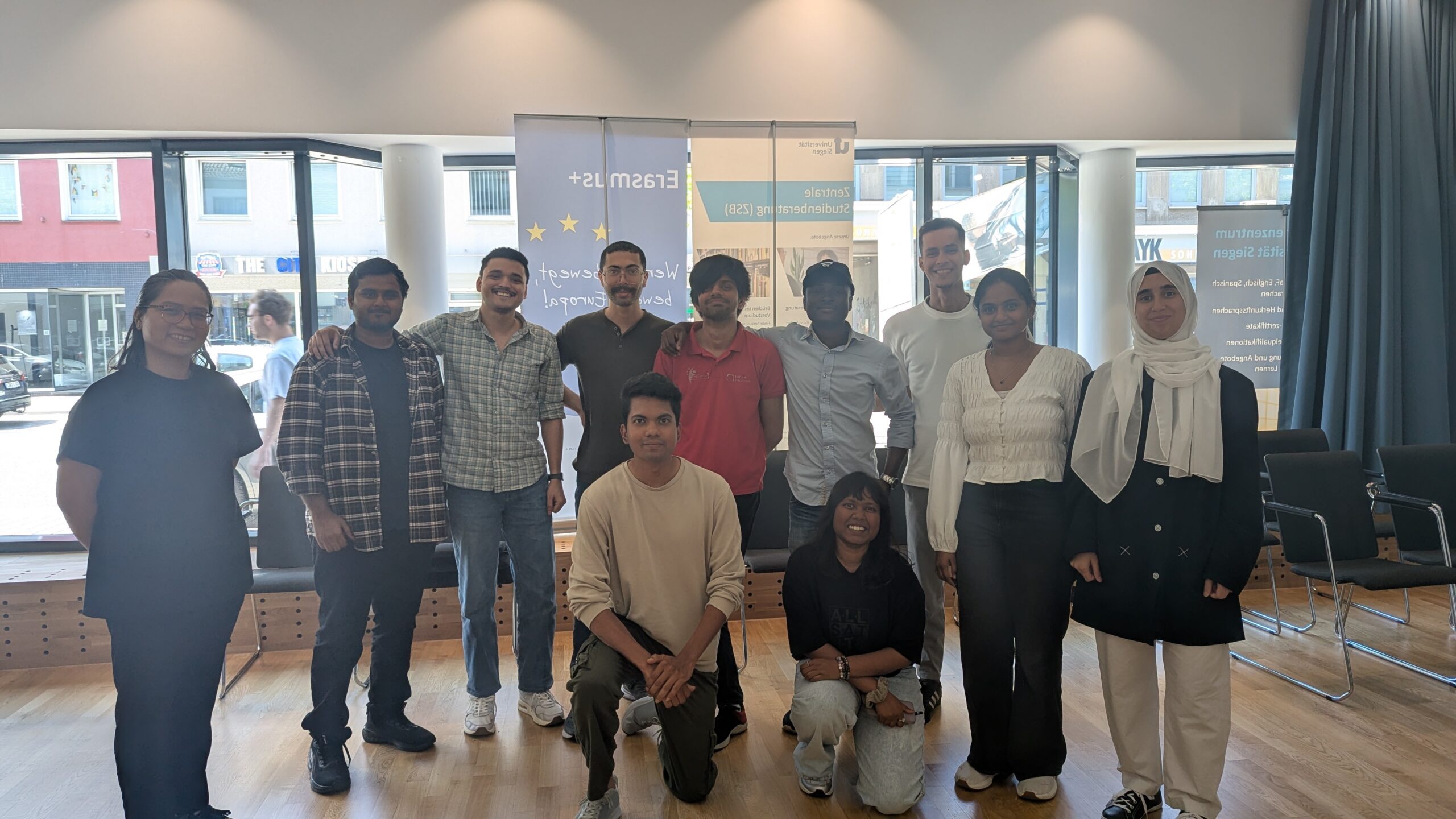
16.05.26 Workshop: Job Hunt Boot Camp | FIT: Soft Skills & Employability
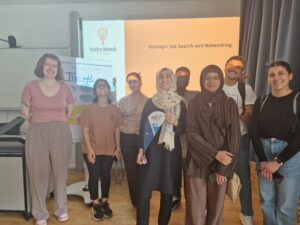
31.07.26 | Workshop: Strategic Job Search | FIT: Soft Skills & Employability
Recap 14.04.2026| Online Workshop: AI in Job Applications | FIT: Soft Skills & Employability
Finding a Student Job: A Quick Guide from One International Student to Another
Welcome to Siegen! By now, you’ve likely started settling in and are gearing up for your upcoming semester. As classes will begin soon, you might be thinking about how to make the most of your time here, whether that means earning some money, gaining work experience, or preparing for your future career. Here’s a quick guide to help you get started on the job search.
What do I need to pay attention to?
Before you start working, check that you’re legally allowed to work. As an international student from a non-EU country, you can work a maximum of 120 full days or 240 half-days per year. Exceeding these limits can have legal consequences.
Where can I find a job?
Your university’s career services are the best place to start. Check out the Jobvermittlung (Job Placement Office), Praktikumsbüro(Internship Office for Faculty I), and the university’s application portal for current job offers. You can also look on external job portals like:
Where can I get help?
Book an appointment with the Career Service for personalized job search advice. The International Office’s FIT project also offers workshops and networking opportunities.
Can I balance a job with my studies?
Yes! Many employers offer flexible hours that fit around your classes. However, aim for 10-12 hours per week to avoid affecting your studies.
How do I find a job in my field?
- Google companies in your field and check the career section of their websites for job listings.
- Consider unsolicited applications: I found my internship for my bachelor’s degree by reaching out directly to companies in my field listed in the Gelben Seiten.
Do I need to speak German?
Jobs in Germany usually require at least B2-level German. Learning the language will greatly improve your chances of finding work and integrating into the community.Check the Language Center for German language classes. However, you can occasionally find some opportunities in Siegen that require only English or minimal German on websites like indeed.com, Arbeitnow and English Speaking Jobs in Germany.
Any advice for international students?
Aim for a part-time job related to your field to gain valuable experience. If you don’t have work experience yet, consider unpaid internships. By your third or fourth semester, you’ll likely be in a better position to land a relevant job.
Good luck with your job search and career start!
Fany Sob
Check out another job-search related article here.
Yes, German CVs Still Require a Photo!
One of the most unique aspects of the German job application process is the requirement for a photo on your CV. While a profile picture may be considered optional or even unnecessary in many countries, it is a key element in Germany. Your photo provides a quick glimpse into your personality and can give insight into your level of motivation.
The Importance of Your Expression and Posture
The way you present yourself in the photo plays a significant role in conveying aspects of your personality. For example, a gentle smile can suggest friendliness and openness. However, your expression and posture should also align with the type of job you’re applying for. In certain industries, such as finance or law, a more serious or professional demeanor might be more suitable.
The Photo Should Be Professional
When it comes to the photo itself, professionalism is key. Your clothing should match the industry you’re applying to. For instance, if you’re applying for a job in banking, finance, or law, wearing a suit would be appropriate. For most other jobs, a neat, clean, and ironed shirt should suffice. The goal is to look polished and put together, but still approachable.
What About the Size of the Photo?
In terms of size, the photo should be passport-sized (roughly 4.5 cm x 3.5 cm) and should be placed at the top of your CV. Make sure the photo is clear and high-quality, as a blurry or poorly lit image can leave a negative impression.
In Summary:
To sum it up, your CV photo should be a professional, clear image where you are dressed appropriately for the job you’re applying for and wearing a friendly, approachable smile.
Quick Tip: Professional application photos can be quite costly. However, you can attend workshops or events offered by the FIT Project, where you might receive a €100 voucher to use for your professional application photos.
Recap Workshop: Employability Assessment Training | FIT: Soft Skills & Employability
On November 14, 2025, participants attended an interactive in-person workshop designed to help them assess and strengthen their personal employability profile.
Led by employability and personal development expert Manuel Löffler, the session offered a mix of expert input, guided reflection, and collaborative exercises to support students in understanding their strengths, competencies, and development needs.
Highlights included:
✅ Assessing one’s current employability profile and identifying relevant strengths and areas for improvement
✅ Reflecting on personal, interpersonal, and professional competencies
✅ Learning which skills and attributes are especially valued in different industries
✅ Understanding how to align one’s individual profile with career goals
✅ Defining practical steps to further develop key competencies and boost employability
Participants immediately put their insights into action — from evaluating their current skill set to identifying concrete development steps for their future careers. By the end of the workshop, students left with greater self-awareness, practical strategies, and renewed confidence to strengthen their employability profile and move forward in their professional journey.
🎓 As part of the Employability Pass, this workshop contributed 2 points in the category Soft Skills & Employability.
Recap 29.11.25 Workshop: Challenges of Working Internationally in Germany | FIT: Soft Skills & Employability
On November 29, 2025, participants took part in an interactive full-day workshop focused on understanding and navigating intercultural communication in the German academic and professional context.
Led by intercultural business communication trainer and coach Gertrud Goudswaard, the session combined expert input, hands-on exercises, and guided reflection to help students build confidence in working across cultures.
Highlights included:
✅ Understanding how cultural values influence communication, teamwork, and leadership
✅ Exploring eight key dimensions that shape collaboration in international business environments
✅ Reflecting on one’s own cultural background and broadening intercultural awareness
✅ Learning strategies to prevent and resolve misunderstandings in diverse settings
✅ Practicing how to adapt communication styles in writing, meetings, and negotiations
✅ Discussing personal questions and real-life challenges related to working in Germany
Participants actively applied their new insights — from analyzing cultural differences to experimenting with communication approaches tailored to the German work environment. By the end of the workshop, students left with greater cultural awareness, practical communication strategies, and more confidence in navigating intercultural situations.
🎓 As part of the Employability Pass, this workshop contributed 2 points in the category Soft Skills & Employability.